
Getting stronger while the weight comes off.
GLP-1 medications can change your weight quickly, but the scale can't tell you how strong you are, how far you can walk, or how steady you feel on your feet. That's where we come in. We help people across Dallas-Fort Worth build strength, energy, and endurance during their weight loss journey, one visit at a time, at home or wherever works best for you.
Or call us at (817) 330-9405. We're happy to answer questions first.
One-on-one care with a board-certified orthopedic specialist · Serving Southlake, Colleyville, and the greater DFW area

Does one of these sound like you?
People on GLP-1 medications come to us for different reasons. See if you recognize yourself in one of these.
-
The weight is coming off, but you feel weaker
This is the one we hear most. The scale is moving in the right direction, but stairs feel harder, groceries feel heavier, and your energy isn't what it was. That can happen when weight loss includes muscle along with fat. The good news is that muscle responds to the right kind of exercise at any age and any weight. We measure where your strength is now and build it back while your weight loss continues.
-
You want to protect your muscle from the start
Maybe you just started the medication, or you're about to, and you've read that keeping your muscle matters. It does. Strength work during weight loss helps you hold onto the muscle that keeps you capable, and starting early is easier than rebuilding later. We set up a simple program that fits your energy, your schedule, and your home, and we adjust it as your body changes.
-
You finally feel ready to move more, and you want to do it right
For a lot of people, losing weight opens a door. Walks sound appealing again. The gym feels possible. Maybe there's a trip, a sport, or a goal you've been quietly thinking about. Starting is exciting, and it's also where people get hurt, because enthusiasm often outpaces what joints and tendons are ready for. We help you ramp up at a pace your body can handle, so the door stays open.
-
Aches and pains are getting in the way
Sometimes a knee, hip, back, or shoulder acts up right when you're trying to become more active. It's frustrating timing. We figure out what's going on with the painful spot, treat it, and keep the rest of your progress moving at the same time. Pain doesn't have to put the whole plan on hold.
-
You're rebuilding after a long stretch of inactivity
If it's been years since you exercised regularly, or a hospital stay or health event set you back, the starting line can feel far away. It's closer than you think. We begin with what you can do today, even if that's a short walk or getting up from a chair more easily, and we build from there. No gym required, no judgment, no assumptions about where you should be.
Whichever situation is yours, the first visit ends the same way: you'll understand where you're starting from, you'll have a plan, and you'll know what comes next.
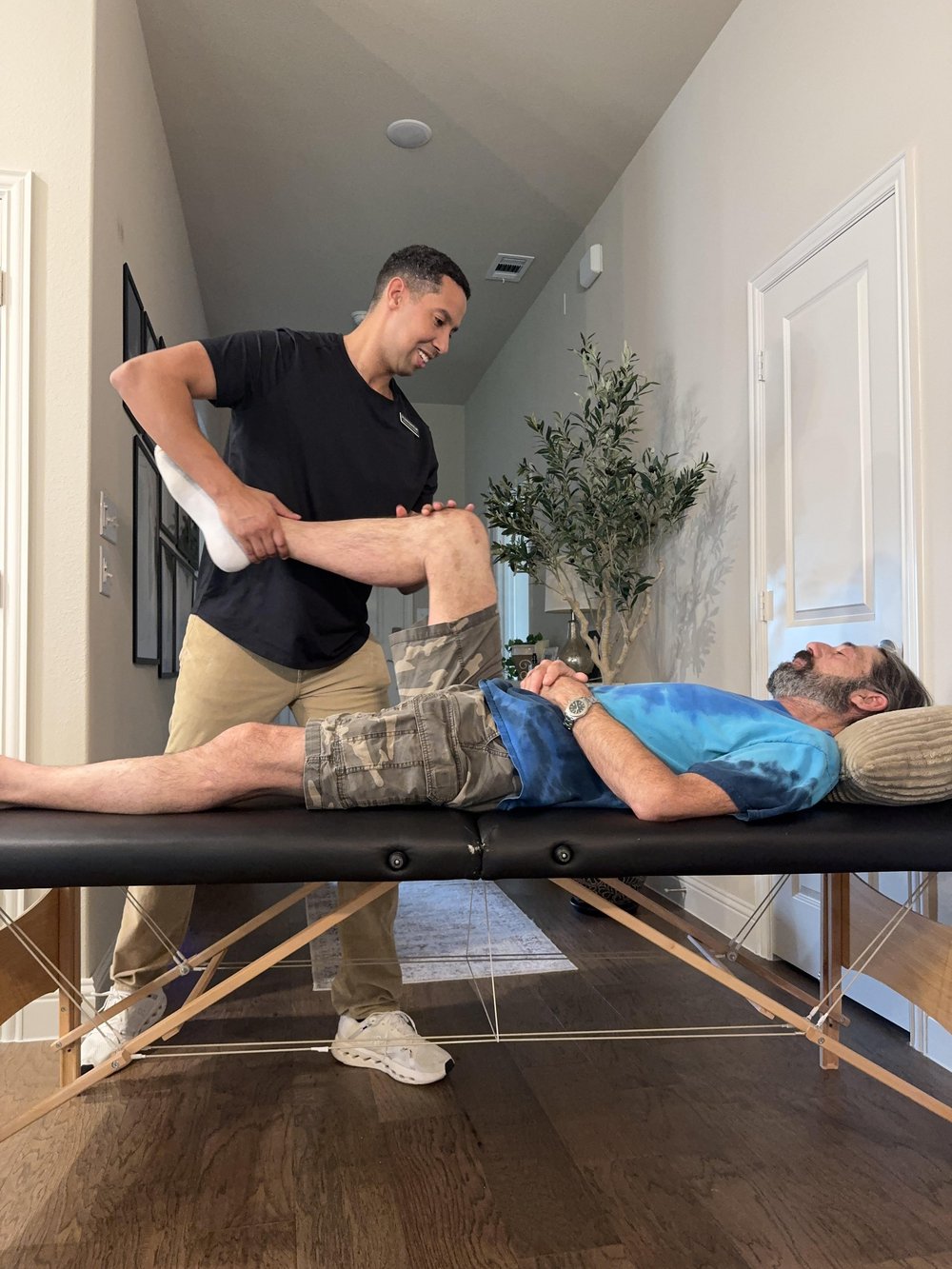
What working together looks like.
The first visit is a conversation before it's anything else. We talk about how things have been going, what's changed since you started the medication, and what you'd like to be able to do. Then we measure the things the scale can't: your strength, your balance, how far and how comfortably you can walk, and how your body handles the daily tasks that matter to you. Because we come to you, we can use your actual stairs, your actual neighborhood, and whatever equipment you have or don't have.
From there, we build a program around your energy and your life. That usually means strength work a couple of times a week, some walking or other endurance activity, and balance work if you need it. We start at a dose your body can handle, watch how you respond, and turn things up gradually as you get stronger. Some days on these medications you'll have less energy than others, and the plan flexes with that. A lighter day is still a day of progress.
One thing we want to be clear about, because it matters: we handle the movement side of your care. Questions about your medication, your dose, or side effects belong with your prescribing doctor or pharmacist, and individual nutrition questions belong with a registered dietitian. If you're feeling nauseated, dizzy, or unusually tired on the day of a visit, just tell us. It changes what we do that day, and that's completely fine. We'd always rather adjust than push.
We also want you to know this is a weight-inclusive practice. You don't need to lose any amount of weight before starting, and we'll never make a number on the scale the measure of your progress. Your progress shows up in what you can do.
The practical stuff, upfront.
Nobody likes hunting through a website for the basics, so here they are.
- Where we meet.
- At your home, your office, your home gym, or another space that suits you. We bring what we need. You don't need any equipment to start, and honestly, working in your real environment usually makes the care better.
- How long visits take.
- Plan on about an hour, all of it one-on-one. No aides, no doubling up with other patients.
- How often we meet.
- Most people start with one or two visits a week and taper down as they build confidence and a routine of their own. You'll always know why we're meeting at the pace we are.
- Do you need a referral?
- In Texas, you can start physical therapy without one for up to 30 days. If we need longer than that, we'll help you get the referral to continue. Your doctor or your insurance may have their own requirements, and we'll flag that early if it applies to you.
- What to wear.
- Comfortable clothes you can move in. That's it.
Your care team, and where we fit.
Good care on a GLP-1 medication is a team effort, and everyone has a lane. Here's ours, and here's where to take the questions we can't answer.
Your prescribing doctor and pharmacist
All decisions about your medication, your dose, and how to handle side effects belong with them. If you have symptoms that are persistent, worsening, or worrying you, they're the right call.
A registered dietitian
Your individual nutrition needs, including protein intake during weight loss, are best guided by a dietitian or another qualified nutrition professional. We're glad to coordinate with yours.
Us, your physical therapist
We measure and build your strength, endurance, balance, and daily function, and we treat the aches and injuries that come up along the way. We'll never tell you to change your medication or your diet, and we'll always tell you when a question belongs with someone else on your team.
A few questions people ask before booking.
Do I need to lose weight before starting?
No, and we want to be really clear about that. You can start exactly where you are today. Weight and physical function are two different things, and our work is about function. There's no number you need to reach first.
I have very low energy some days. Will that be a problem?
Not at all, and please don't cancel over it. Just tell us how you're feeling when we arrive, and we'll shape the visit around it. A gentler session on a low-energy day still counts, and knowing how your energy moves week to week actually helps us build a better plan.
Can you answer questions about my medication or side effects?
Those questions belong with your prescribing doctor or your pharmacist, and we'll always point you their way. What we will do is adjust your exercise around how you're feeling, and encourage you to check in with your prescriber if something seems off.
I haven't exercised in years. Is this going to be too much?
No. The plan starts with what you can do today, whatever that is, and moves at your body's pace. Some of our favorite starting points are things like getting out of a chair, walking to the mailbox, and standing exercises at the kitchen counter. Everyone's first step looks different, and all of them count.
How will I know it's working?
You'll feel it, and we'll measure it. We track things like how far you can walk, how much you can lift, how steady your balance is, and how everyday tasks feel. When those numbers move, you'll see them. And if something stalls, we change the plan instead of repeating it.
Looking for something more specific?

Let's build the strength to go with the weight loss.
Tell us where you are in your journey, what's feeling harder than it should, and what you'd like to be able to do. Your first visit ends with a clear picture of where you're starting from, a plan that fits your energy and your life, and a straight answer about what comes next. We serve Southlake, Colleyville, and the surrounding Dallas-Fort Worth area, and we're glad to talk before you book if that's easier.