
2026 GrapeFest active-day guide
Pace your GrapeFest day before your legs make the choice.
The 40th Annual GrapeFest runs four days across Historic Main Street. We built this guide around the choices that change the physical load: when admission is free, how you arrive, where you can take a verified cool break, and how much walking you still owe at the end.
- Dates
- September 17–20, 2026
- Hours
- Thu 11–10 · Fri/Sat 11–11 · Sun 11–6
- Lowest-load entry window
- Thursday is complimentary all day
- Verified reset
- The Post · 113 E. Texas St. · hours TBA
The short answer
Pick one GrapeFest anchor, choose the arrival option that protects your walk back, and route through The Post before you need it. After a real seated or fully supported reset, add one more stop only if your gait, balance, symptoms, attention, and return-trip reserve still look like yours.
The official 2026 activity map is not posted yet. Use the logistics that are confirmed now, then rebuild the route when the organizer publishes the map.5
What is verified—and what is not
Plan from official facts, not a festival photo.
The organizer has published useful 2026 dates, hours, admission, parking, transportation, gate, bag, and rest-station information. Several details that matter to a mobility plan remain unfinished.
Confirmed now
- Four event days: September 17–20, 2026.
- Thursday 11 a.m.–10 p.m.; Friday and Saturday 11 a.m.–11 p.m.; Sunday 11 a.m.–6 p.m.
- Thursday is complimentary all day; Friday becomes paid after 5 p.m.; Saturday and Sunday are paid admission.
- The Post at 113 E. Texas Street is listed as a cool rest station with water and restrooms.
- Free walk-in lots, free shuttle lots, paid lots, limited ADA lots, TEXRail, and ride-share are listed.
- Wheelchairs and medical scooters are allowed through festival gates.246
Still needs a close-to-event check
- The 2026 activity map; the official map page currently says to check back.
- The Post rest-station hours, which are still listed as TBA.
- The final stage, tasting, contest, family, and vendor schedule.
- Which admission gate creates the shortest usable route to your priority.
- Shuttle frequency, boarding setup, lines, and real-time capacity.
- Weather, temporary closures, surface conditions, and any policy update.
One useful inconsistency to notice: the official parking page says complimentary shuttles will be provided at three locations, but the text I reviewed gives details for two—the Grapevine Public Library and Gaylord Texan Lot R. Verify the current list rather than assuming a third location.4
Hours and admission
A smaller day can also be the simpler ticket choice.
Admission timing changes by day. Wine tastings and other special experiences may need a separate ticket in addition to festival admission, so a paid experience is not proof that your gate admission is covered.237
Complimentary admission all day.
Complimentary until 5 p.m.; paid admission after 5.
Paid admission.
Paid admission.
Mobility implication: if your goal is a short visit rather than a long evening, Thursday or Friday before 5 p.m. removes the general-admission purchase from the plan. It does not guarantee a smaller crowd, shorter line, cooler weather, or an easier route.
Choose the day size
Make one experience the success condition.
GrapeFest includes wine experiences, live music, food, shopping, family activities, GrapeStomp, and more. “See everything” is not a useful mobility target. Choose the part that would make the outing worthwhile, then let the rest remain optional.1
Anchor visit
One gate, one must-see experience, The Post if open, then the simplest route out. Best when walking or standing reserve is limited or unpredictable.
Anchor plus one
Your must-see experience, a real reset, then one nearby optional stop only if your walking pattern remains steady.
Longer day
Several zones or timed events, with a planned reset and exit route. Choose this only from current capacity—not because the schedule looks full.
Group plan: agree on one meeting point and an exit rule before entry. Your companions can keep exploring without requiring you to match their walking pace or wait unsupported.
Parking and transportation
Arrival is part of the activity dose.
The organizer lists walk-in lots, shuttle lots, paid parking, ADA parking, TEXRail, and ride-share. None is universally “best.” Choose by the walking, standing, transfer, and waiting tasks you can manage that day.4
Free walk-in lots
Examples include 410 W. Dallas Road and 311 W. Dallas Road. The organizer calls them within walking distance and says they do not have shuttle service. It does not publish a single guaranteed distance to your destination.
Free shuttle lots
The current page details the Public Library at 1201 Municipal Way and Gaylord Texan Lot R at 5 Turner Road. It says service runs from one hour before gates open until one hour after gates close. Recheck the final list and boarding details.
TEXRail
Grapevine/Main Street Station is listed next to South Admission Gate 15. A train may reduce parking uncertainty, but you still need to account for platform, boarding, schedule, and the trip home.
Ride-share
The parking page lists 410 W. Dallas Road at the south end and 102 S. Main Street at the north end. Save the precise pickup point; “Main Street” is too vague in a crowd.
ADA parking is limited: the organizer lists A1 at 110 S. Barton Street near North Gate 1A and A2 at 255 E. Dallas Road near South Gate 15A. A valid permit is required; spaces may fill; neither lot has shuttle service. A2 is a paid lot with elevators, and the posted route involves a railroad crossing. Confirm the current setup before relying on either option.4
Devices, bags, and gates
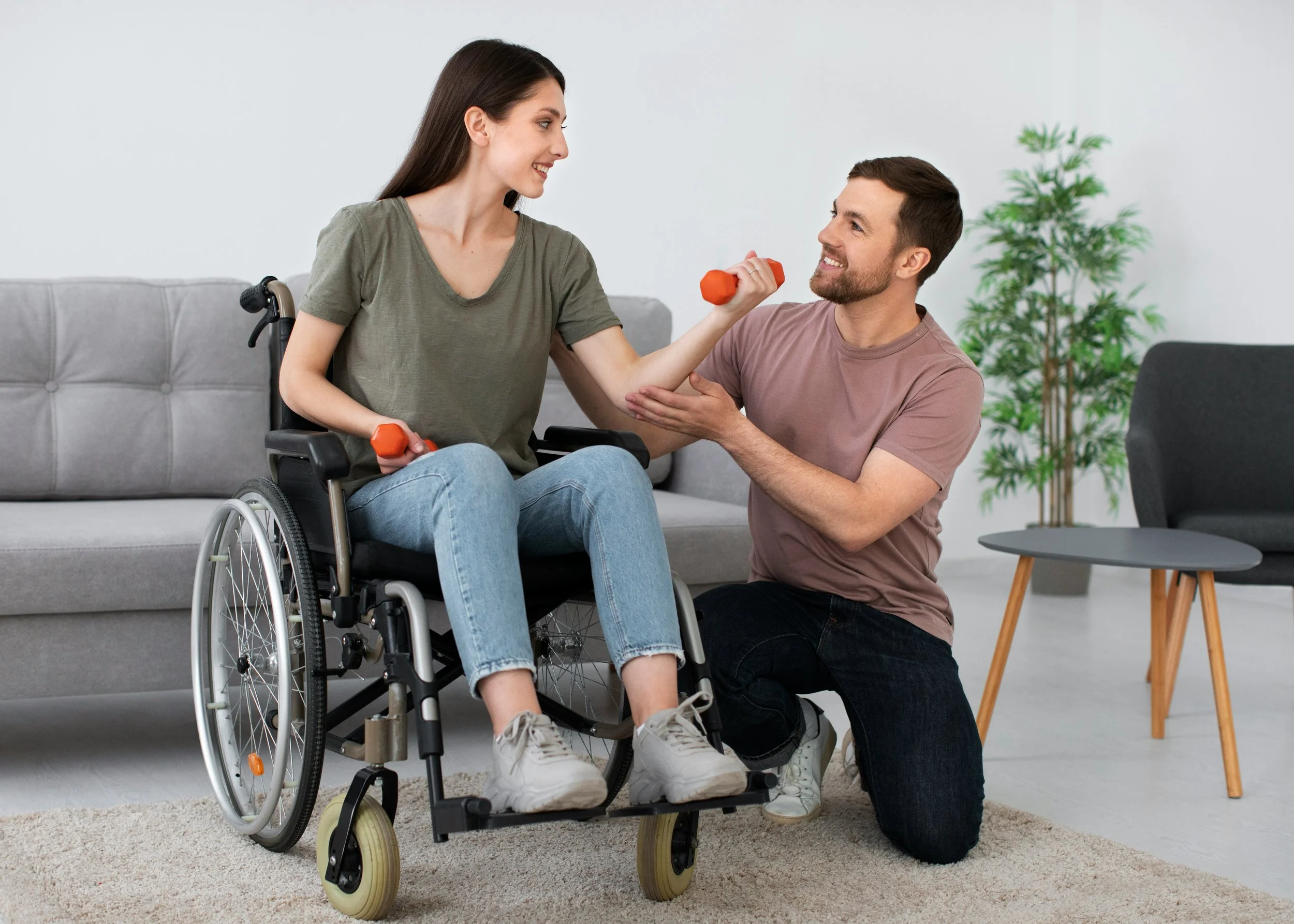
Medical mobility devices are allowed—but route fit still matters.
The official policy allows wheelchairs and medical scooters. It also allows service animals, strollers, food for guests with special dietary needs, and small bags or backpacks no larger than 12 by 12 by 6 inches. All bags, including purses, backpacks, and diaper bags, are searched before entry.6
- Use the device you knowA cane, walker, rollator, wheelchair, or medical scooter should already fit your transfers, brakes, turning, and endurance needs.
- Clarify “scooter”The policy allows medical scooters but lists scooters and Segways among prohibited items. If your equipment could be misunderstood, contact the organizer before arrival.
- Keep support availableIf you need both hands for a walker or rail, let a companion carry purchases, food, or tickets.
- Ask about surfacesThe map is not posted yet. Confirm curb cuts, temporary ramps, railroad crossings, gate width, restroom access, and the shortest route to your priority.
A verified reset point
The Post is useful—if it is open when you need it.
The official general-information page lists The Post at 113 E. Texas Street as a cool place to take a break, get water, and use restrooms with diaper-changing stations. Its 2026 hours are still TBA.2
Route through the reset.
Do not treat The Post as a rescue point at the end of a long loop. If its final hours fit your visit, place it between your anchor and any optional stop.
- Before entryConfirm The Post hours and find it on the published map when that map becomes available.
- At the resetSit or fully support yourself, cool down, and give symptoms time to settle. Waiting in another standing line is not a break.
- After the resetWalk a short, ordinary segment and compare with your arrival pattern before adding anything.
- If it is closedUse the simpler day size. Do not assume another indoor, seated, cool, water-and-restroom option will be available in the same place.
What the body is actually doing
Crowd pace, lines, turns, and carrying all count.
A festival can feel harder than an equally long neighborhood walk because movement is less predictable. The useful measure is not only minutes or steps; it is whether you can keep your usual control and still complete the return.
Slow, interrupted walking
Frequent stops and short steps may increase knee, foot, or back symptoms even when the route looks compact.
Standing in place
Tasting, ticket, restroom, shuttle, and food lines can become the largest sustained task of the day.
Looking while moving
Signs, booths, crowds, music, curbs, and conversation divide attention and raise the balance demand.
Practice a small version—not the whole festival.
On a typical day, sample the kind of walking, standing, turning, and waiting you expect. Use your usual shoes and device. Notice when stride, posture, foot clearance, balance, symptoms, or attention begin to change, and how you feel later that day and the next morning.
That observation gives you a better starting rule than a large step goal. It also shows whether the limiting task is endurance, pain, balance, heat tolerance, standing, or recovery.
Wine, water, and weather
A tasting does not replace hydration or a recovery check.
Alcohol can affect coordination and judgment and can interact with prescription and over-the-counter medicines. NIAAA warns that combining alcohol with some medicines can increase drowsiness, fainting, loss of coordination, bleeding, breathing problems, and fall risk.10
- Check medication interactionsRead the label and ask a pharmacist or prescriber before the event if you are unsure. Wine is optional even at a wine festival.
- Use the verified water optionThe Post is listed for water, but its hours are TBA. Bottles and beverages are on the prohibited-items list, so confirm current water and medical-exception policies instead of assuming you can carry your own.26
- Check Grapevine weatherUse the National Weather Service within 48 hours and again before leaving. Temperature, humidity, sun, wind, and rain can change the practical walking dose.8
- Shorten for heatCDC advises staying cool, hydrated, and alert for heat illness. Use shade or a cool reset when available and do not push through confusion, faintness, or worsening illness.9
The one-more-stop test
Decide after a real reset—not while the group is moving.
This is a practical decision aid, not a diagnosis. Compare with your own normal pattern and include the distance, line, platform, shuttle, or transfer still needed to leave.
One nearby stop may fit
Your stride, posture, balance, symptoms, and attention feel close to arrival. You know the exit route and have reserve for it.
Make the exit the next stop
Pain is climbing, your limp is larger, foot clearance or balance is changing, you need more support, or the ride home now feels uncertain.
Stop and get help
A serious fall, fainting, new confusion, sudden one-sided weakness, severe breathing trouble, or possible heart-attack or stroke symptoms needs urgent action.
Quick answers
2026 GrapeFest mobility FAQ
What are the 2026 GrapeFest dates and hours?
September 17–20, 2026: Thursday 11 a.m.–10 p.m.; Friday and Saturday 11 a.m.–11 p.m.; Sunday 11 a.m.–6 p.m. Recheck close to the event for operational changes.2
When is admission free, and what does paid admission cost?
Thursday is complimentary all day. Friday is complimentary until 5 p.m., then paid. Saturday and Sunday are paid. Published daily prices are $12 for adults; $6 for age 62+ and children 6–12; complimentary for age 5 and under. A weekend pass is $25. Special wine experiences may require another ticket.23
Where is the verified rest station?
The Post at 113 E. Texas Street is listed as a cool place to rest, get water, and use restrooms. Its hours are still TBA, so check before building your route around it.2
Which parking or transportation option is best for limited walking?
Are wheelchairs, walkers, and medical scooters allowed?
The policy specifically allows wheelchairs and medical scooters. Use familiar equipment and ask about gate width, surfaces, curb cuts, temporary ramps, restrooms, and rail crossings when those details affect you. The policy separately prohibits non-medical scooters and Segways.6
What can I bring through the gate?
Small bags and backpacks no larger than 12 by 12 by 6 inches, purses, diaper bags, special-dietary-needs food, service animals, wheelchairs, medical scooters, and strollers are listed as allowed. All bags are searched. Bottles, beverages, coolers, pets, bicycles, and many other items are prohibited; review the full official list.6
What should I know about wine and medicines?
Alcohol can affect coordination and interact with many medicines. Check labels and ask a pharmacist or prescriber if you are unsure. Keep the walking and transportation home in the plan, and do not use sitting at a tasting as proof that your balance has recovered.10
What if pain, fatigue, dizziness, or balance trouble starts climbing?
Stop adding stops. Sit or fully support yourself somewhere safe, cool down if needed, and choose the simplest route out. Get emergency help for a serious fall, fainting, severe breathing trouble, new confusion, stroke signs, heart-attack warning signs, or another fast medical change.
Sources and update check
Official event, access, and safety sources
Event facts were checked August 5, 2026. Recheck within 48 hours of attending because the map, rest-station hours, schedules, parking operations, policies, and weather can change.
- Grapevine Convention & Visitors Bureau. 40th Annual GrapeFest. Official 2026 event overview and activities.
- GrapeFest General Information. Official dates, hours, admission, and The Post rest-station details.
- GrapeFest Tickets. Published general-admission prices and separately ticketed experiences.
- GrapeFest Parking & Directions. Free, shuttle, paid, ADA, TEXRail, and ride-share information.
- GrapeFest Map. The official page currently says to check back for the 2026 activity map.
- What Is Allowed & Not Allowed at GrapeFest. Gate, bag, food, beverage, service-animal, and mobility-device policies.
- GrapeFest Frequently Asked Questions. Special-experience admission, pet, parking, ride-share, and carnival information.
- National Weather Service. Grapevine, Texas Forecast.
- Centers for Disease Control and Prevention. About Heat and Your Health. Updated July 20, 2026.
- National Institute on Alcohol Abuse and Alcoholism. Harmful Interactions: Mixing Alcohol with Medicines.
- Centers for Disease Control and Prevention. Signs and Symptoms of Stroke.
- American Heart Association. Warning Signs of a Heart Attack.
A measured next step
Want to test the task that limits your festival day?
Argan provides one-on-one, in-home physical therapy. We can examine the walking, standing, balance, device, or recovery task that changes your outings, then build a plan around your real home and community demands.
Core service area: Southlake and Colleyville. Selected nearby DFW addresses may be available with a travel fee. New care is self-pay; I confirm fit, price, and location before booking.