
Dry needling in Southlake and nearby DFW
Dry needling for pain and movement—used with a plan, not as a shortcut
It may provide short-term relief for some musculoskeletal problems. It is optional, never automatic, and should support movement, strength, and the activity you want back.
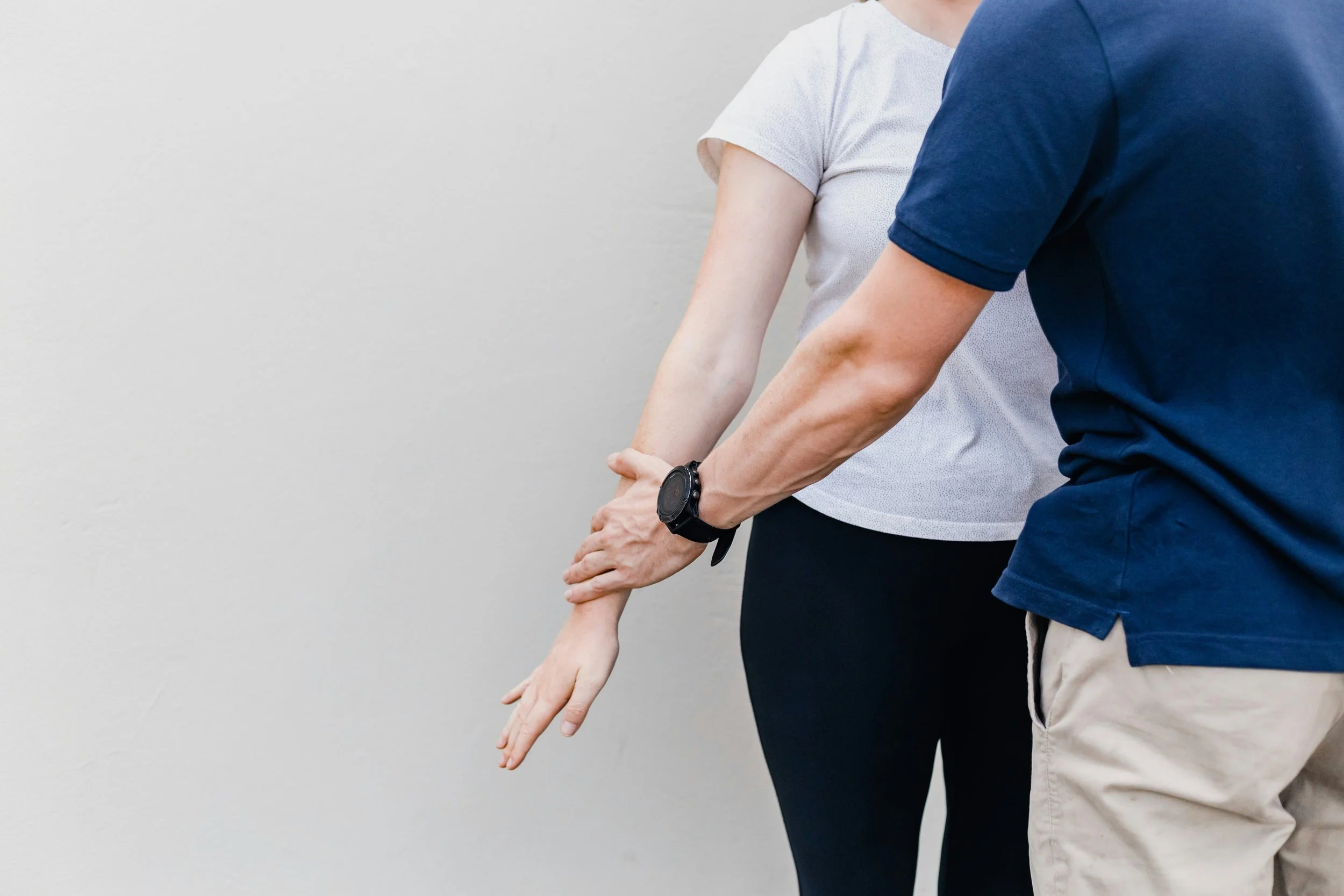
- No injection
- A sterile, single-use solid filiform needle is used; no medication is injected.
- Consent first
- You may decline, change your mind, or stop at any point without losing access to the rest of PT.
- Reassess function
- A relevant movement or task matters more than a twitch or a tender point.
- Pair with a plan
- Needling is an optional adjunct—not a substitute for active rehabilitation.
The short answer
Possible short-term benefit. No universal promise.
Research suggests dry needling can reduce pain or disability in the short term for some musculoskeletal conditions. Results vary by body region, technique, comparison treatment, and patient group. Broad claims about lasting superiority are not justified.3
A 2021 clinical practice guideline for chronic low back pain says physical therapists can consider dry needling in conjunction with other treatments for short-term improvement—not as a stand-alone cure.3

What it is—and is not
A selected PT technique, not an explanation for every pain.
A trained clinician inserts a sterile, single-use solid filiform needle into selected muscle or other soft tissue. The target comes from the history and movement exam—not merely from finding a sore spot.
It may help
Temporarily reduce pain or sensitivity, improve movement tolerance, or make active rehabilitation easier for the right person.
It does not
Inject medication, remove toxins, prove that a “knot” caused the whole problem, or replace exercise, recovery, and medical evaluation when needed.
A twitch is not the goal
A local twitch can occur, but it is not required and does not prove that treatment worked.
The next task matters
We look for change in turning, lifting, walking, working, sleeping, or training—not soreness for its own sake.
What the evidence can support
Use a short, goal-directed trial—and keep the standard high.
Dry needling should earn its place by helping a meaningful activity or making the active plan more tolerable. Temporary sensation change without functional value is not enough.
Short-term change
Selected patients may notice less pain, lower sensitivity, or easier movement for a period of time.
Mixed methods and populations
Study results cannot be applied as if every body region, technique, and diagnosis behaves the same way.
Reassess a relevant task
If the chosen outcome does not improve meaningfully, routine repeat needling is difficult to justify.
The goal is better function—not simply a temporary change in a tender spot.
Safety and informed consent
Minor reactions are common. Serious complications are uncommon—but possible.
Screening, anatomy, sterile technique, treatment location, and your medical context all matter.4
Expected temporary responses
A pinprick, pressure, deep ache, twitch, brief soreness, small bruise, or spot of bleeding can occur. Some people feel lightheaded around needles.
Important risks
Depending on the region: infection, injury to a nerve or blood vessel, and injury to an organ. Pneumothorax is a specific concern near the chest and upper shoulder.
Consent can change
Expected benefit, material risks, alternatives, and uncertainty should be explained. You can decline or stop without compromising the rest of your care.
Seek urgent medical help for shortness of breath, chest pain, or a persistent new cough after needling near the chest, ribs, neck, or upper shoulder.
Tell us before treatment
Some factors change the site, technique, precautions, or decision.
These factors do not all create an automatic no. They require an individual risk–benefit discussion, and some situations may need medical clearance or a different option.5
Bleeding and medication
A bleeding disorder, blood-thinning medication, easy bruising, or a recent medication change.
Skin, infection, and healing
Fever, active infection, rash, irritation, open wound, immune suppression, diabetes, or another healing concern.
Medical and procedural context
Pregnancy, recent surgery, joint replacement, postoperative restrictions, reduced sensation or circulation, or lung disease and prior pneumothorax.
Comfort and equipment
Fainting history, needle anxiety, relevant sensitivities, or an implanted electrical device if electrical stimulation is being considered.

What a visit involves
Examine, decide together, treat, retest, and follow through.
Needling is never the whole appointment and is not automatically included.
Examine
Identify the movement, load, or activity that matters and screen for a different care lane.
Decide
Discuss expected benefit, risks, alternatives, and the option to say no.
Treat
Use sterile, single-use filiform needles only after informed consent.
Retest
Repeat a relevant movement or task instead of judging success by a twitch.
Build
Pair any symptom change with movement exposure, strength, and self-management.
After treatment
Return the attention to movement and monitor the right signs.
Normal short-term response
Temporary soreness or bruising can occur and often settles within a day or two. Comfortable movement is generally encouraged, with instructions adjusted for the treated area and your activity.
Contact a clinician promptly
Uncontrolled bleeding, spreading redness, fever, progressive weakness or numbness, or another rapidly worsening symptom needs prompt review.
Do not chase soreness
Stronger discomfort does not mean better treatment. Tell the therapist if you want the technique changed or stopped.
Make the window useful
If symptoms ease, use that window for the relevant exercise, movement practice, or task—not endless passive treatment.
Dry needling
Eight practical answers
Does dry needling hurt?
You may feel a small pinprick, pressure, deep ache, or brief twitch. Sensation varies, and stronger discomfort does not mean better treatment. Ask for the technique to change or stop at any time.
Is dry needling acupuncture?
Both may use thin filiform needles, but they are delivered within different professional and clinical frameworks. Here, dry needling is selected from a PT examination and incorporated into rehabilitation; it is not offered as acupuncture.
What problems can it help?
Evidence suggests possible short-term benefit for selected musculoskeletal pain and movement problems. It is not a proven solution for every diagnosis, and the examination—not the body-part label alone—determines whether it is reasonable.
Is it safe?
Minor bleeding, bruising, soreness, and discomfort can occur. Serious harm appears uncommon but is possible, so anatomy, sterile technique, informed consent, and individual screening matter.
Can I have dry needling while taking blood thinners or during pregnancy?
Possibly, but disclose it first. Neither factor creates one universal yes-or-no answer; body region, technique, individual risk, and available alternatives must be considered.
How many sessions will I need?
There is no evidence-based universal series. Agree on a short, goal-directed trial and reassess each response. If a meaningful movement or activity does not improve, the plan should change.
Can I exercise afterward?
Many people can continue normal activity as tolerated. Training may be adjusted based on the treated area, soreness, and the reason needling was selected.
What if We do not want needles?
That is completely acceptable. Dry needling is optional, and other evidence-based approaches can address pain, strength, mobility, and confidence. Consent can be withdrawn at any point.
Professional guidance and evidence
Sources
- American Physical Therapy Association. Dry Needling.
- Federation of State Boards of Physical Therapy. Dry Needling Resources.
- JOSPT. Interventions for the Management of Acute and Chronic Low Back Pain: Revision 2021.
- Boyce et al. Adverse Events Associated With Therapeutic Dry Needling.
- Muñoz et al. Dry Needling and Antithrombotic Drugs.
- National Center for Complementary and Integrative Health. Acupuncture: Effectiveness and Safety.
Educational information only. Dry needling is not appropriate for every patient, diagnosis, or treatment area. Individual screening, informed consent, clinician training, and applicable professional rules govern care.
A technique should earn its place
Want to know whether dry needling belongs in your plan?
Start with a physical therapy assessment. The problem, options, benefits, risks, and alternatives come first; dry needling is used only if it fits your goals, passes screening, and you want it.