
JointPerform™ · Educational readiness framework
Know what your new joint may be ready for.
After hip or knee replacement, a calendar can tell you how long it has been. It cannot tell you whether your body is prepared for airport lines, a golf swing, or the next gym progression. JointPerform™ organizes that decision around the demands that matter to you.
By Zakaria Nadif, PT, DPT, OCS, CSCS, Cert. Dry Needling Educational framework · Not medical clearance

The short answer
Time since surgery is context—not clearance.
A date on the calendar does not show how you walk, turn, balance, lift, recover after effort, or handle the exact task you want back. JointPerform™ considers healing and surgeon guidance first, then looks at movement, symptoms, confidence, and goal-specific demands.
Current guidance generally supports lower-impact activity after joint replacement, may support intermediate-impact activity when the person has relevant experience, and generally discourages high-impact sport. Those categories still do not replace an individual decision with your surgeon and rehabilitation team.1, 2
Five clear views
One score cannot answer a whole-life question.
JointPerform™ keeps five parts of readiness visible on their own. The result is a practical conversation about the next safe challenge—not a misleading online “pass.”
Healing and surgeon guidance
Start with the procedure, precautions, recovery course, medical history, and anything your surgeon has told you to avoid or delay.
Capacity you can demonstrate
Look at motion, strength, walking, balance, transfers, control, and whether the relevant task can be repeated—not just completed once.
Response during and after
Track pain, swelling, fatigue, instability, and how the joint responds later that day and the following day.
Travel is not golf is not the gym
Airport walking, rotational sport, and loaded exercise ask different questions. The assessment should match the life you want back.
Prepared, not merely hopeful
Confidence matters most when it is paired with a plan, repeatable performance, and a realistic way to progress or modify the task.
JointPerform™ is an educational readiness framework. It does not clear you for an activity, determine medical risk, or replace a clinical examination or your surgeon’s advice.
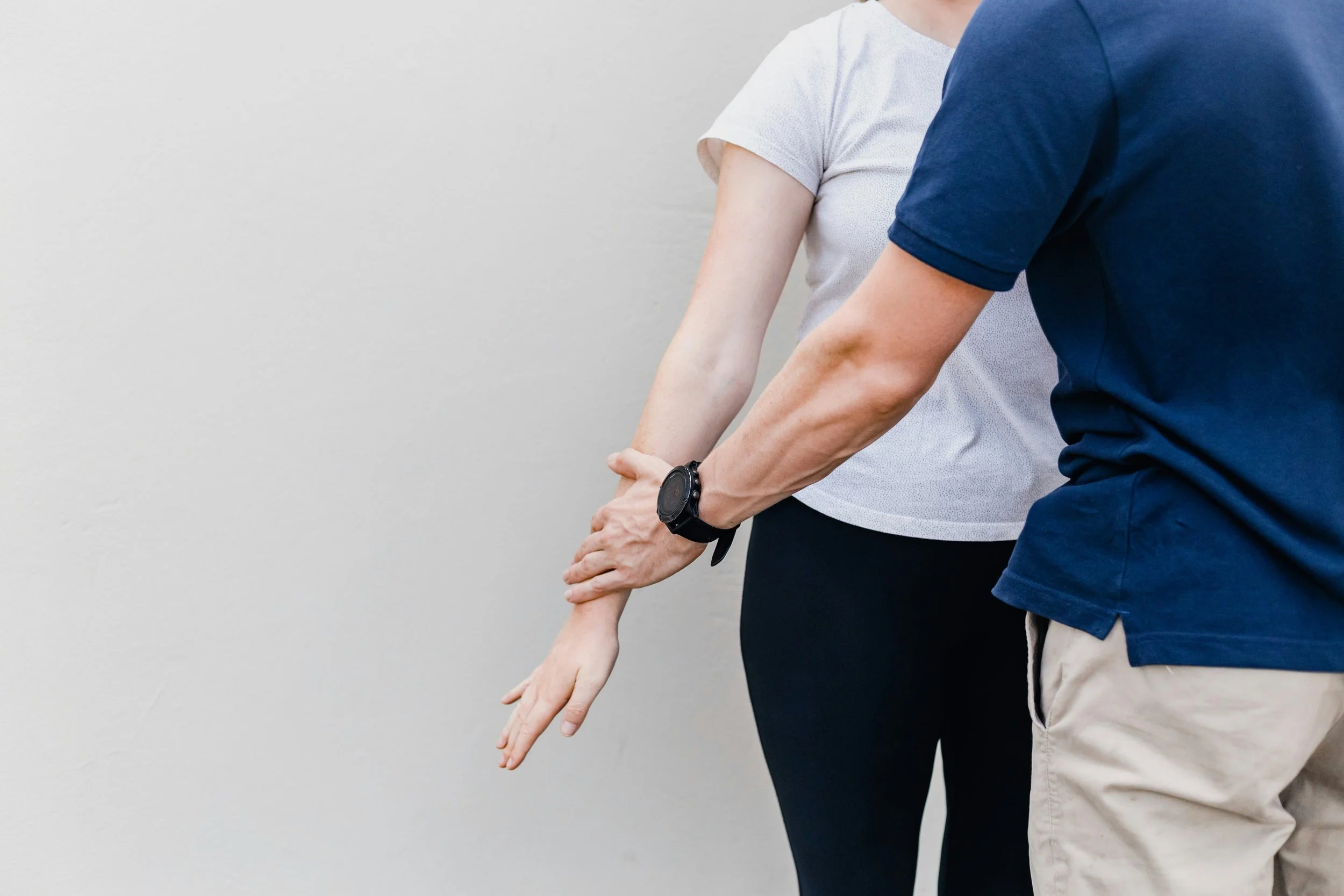
From question to plan
What a JointPerform™ evaluation may examine
The visit starts with your goal and surgeon guidance, then selects tests that resemble the demands you actually need to handle.
Your target
Define the trip, course, workout, event, or daily task precisely—including duration, terrain, speed, load, and available help.
Baseline function
Review walking, transfers, stairs, balance, joint motion, strength, and relevant movement control.
Task simulation
Use an appropriate, scaled version of the real demand—for example repeated sit-to-stands, carrying, turning, or sustained walking.
Recovery response
Consider symptoms during the task and whether pain, swelling, or fatigue increases after the challenge.
Your next progression
Leave with a graded next step, a way to monitor response, and clear reasons to pause or reconnect with your medical team.
Different goal, different questions
Match the test to the life you want back.
“Ready for activity” is too vague to be useful. These examples show why the destination changes the assessment.

Travel
Prepare for the whole itinerary
Consider walking distance, lines, seat transfers, luggage, prolonged sitting, swelling, uneven surfaces, and the help available. AAOS advises asking your doctor before air travel after knee replacement.1


Gym & fitness
Classify the exercise, not the building
Walking, cycling, free weights, machines, deep positions, speed, and impact are not equivalent. Weight training is generally considered intermediate impact and should be progressed around prior experience, current capacity, and surgeon-specific restrictions.2
Medical questions come first
Some signs need your medical team—not a harder test.
Contact your surgeon or medical team promptly for concerning changes such as persistent fever or chills; increasing wound redness, drainage, tenderness, swelling, or pain; unusual calf pain, redness, or swelling; or other symptoms your surgical team told you to report. Sudden chest pain or shortness of breath can be an emergency—seek emergency care.1
New or escalating symptoms
Do not use a readiness test to “push through” a possible postoperative complication.
Your surgeon or medical team
They determine medical precautions, complication risk, and whether further evaluation is needed.
Chest pain or shortness of breath
Seek emergency care rather than waiting for a physical therapy visit.
Private, goal-specific evaluation
Bring the goal. Leave with the next useful step.
Care can come to your home in Southlake, Colleyville, and nearby communities, with availability across the wider DFW area. A travel fee may apply outside the main service area.
What to bring
Your surgeon’s guidance, current precautions, relevant records if available, the exact activity you want to resume, and the questions that are keeping you uncertain.
What you receive
A task-specific assessment, plain-language interpretation, practical progression options, and clear boundaries for when to defer to your surgeon.
Payment
New care is self-pay. HSA and FSA cards are accepted. A superbill may be available for you to submit, but reimbursement is not promised.
What this is not
No online score, generic timeline, or guarantee. JointPerform™ does not replace medically necessary rehabilitation, medical clearance, or your surgeon’s restrictions.
Frequently asked questions
JointPerform™ questions, answered
Who is JointPerform™ for?
It is designed for adults after hip or knee replacement who have a specific next-life question—such as travel, golf, gym work, or a harder activity—and want a task-specific readiness discussion. It may be useful during rehabilitation or after discharge, depending on your needs.
Does JointPerform™ clear me for an activity?
No. It is an educational readiness framework and physical therapy evaluation. Your surgeon’s advice and restrictions govern medical clearance. The visit helps organize functional findings and build a practical plan around them.
Will I receive a pass/fail score?
No single number can represent healing, surgeon guidance, movement, symptoms, confidence, and every activity’s demands. You receive a profile of those areas and a recommended next step—not a universal pass or fail.
How is readiness assessed beyond weeks since surgery?
The evaluation may consider motion, strength, balance, walking, transfers, task-specific control, repeatability, symptoms during effort, and the joint’s response later that day or the next day. The exact tests depend on your goal and medical context.
Can JointPerform™ help me prepare for air travel?
It can help you plan for walking, lines, transfers, luggage, prolonged sitting, and the physical demands of the trip. It cannot determine clot risk or provide medical clearance. AAOS advises asking your doctor before air travel after knee replacement.
Can it help me return to golf?
Yes, the evaluation can distinguish putting, range practice, cart golf, walking, and a full round, then examine relevant balance, turning, endurance, and recovery. Your surgeon’s go-ahead and individual response still matter.
Can I lift weights or return to the gym after joint replacement?
“The gym” includes many different demands. Lower-impact conditioning and intermediate-impact resistance work should not be treated as the same question. Progress should reflect prior experience, current capacity, symptoms, and surgeon-specific guidance.
What does it cost, and can I use insurance?
New care is self-pay. HSA and FSA cards are accepted. A superbill may be available for you to submit to your insurer, but coverage and reimbursement are not guaranteed.
Clinical sources
Evidence behind this page
- American Academy of Orthopaedic Surgeons. Activities After Total Knee Replacement. Patient guidance on recovery, lower-impact activity, air travel, and warning signs.
- Arshi A, Hughes AJ, Robin JX, Parvizi J, Fillingham YA. Return to Sport After Hip and Knee Arthroplasty: Counseling the Patient on Resuming an Active Lifestyle. Current Reviews in Musculoskeletal Medicine. 2023;16:329–337.
Evidence note: return-to-activity recommendations after joint replacement rely partly on observational research, surgeon surveys, and expert consensus; they are not universal rules. This page is educational and does not diagnose a complication, determine surgical healing, or replace advice from your surgeon or other qualified clinician.
A clear next step
Test the demands that matter to your life.
Bring your goal, your surgeon’s guidance, and your current questions to a private, goal-specific evaluation with Zakaria Nadif.