Care at home · DFW decision guide
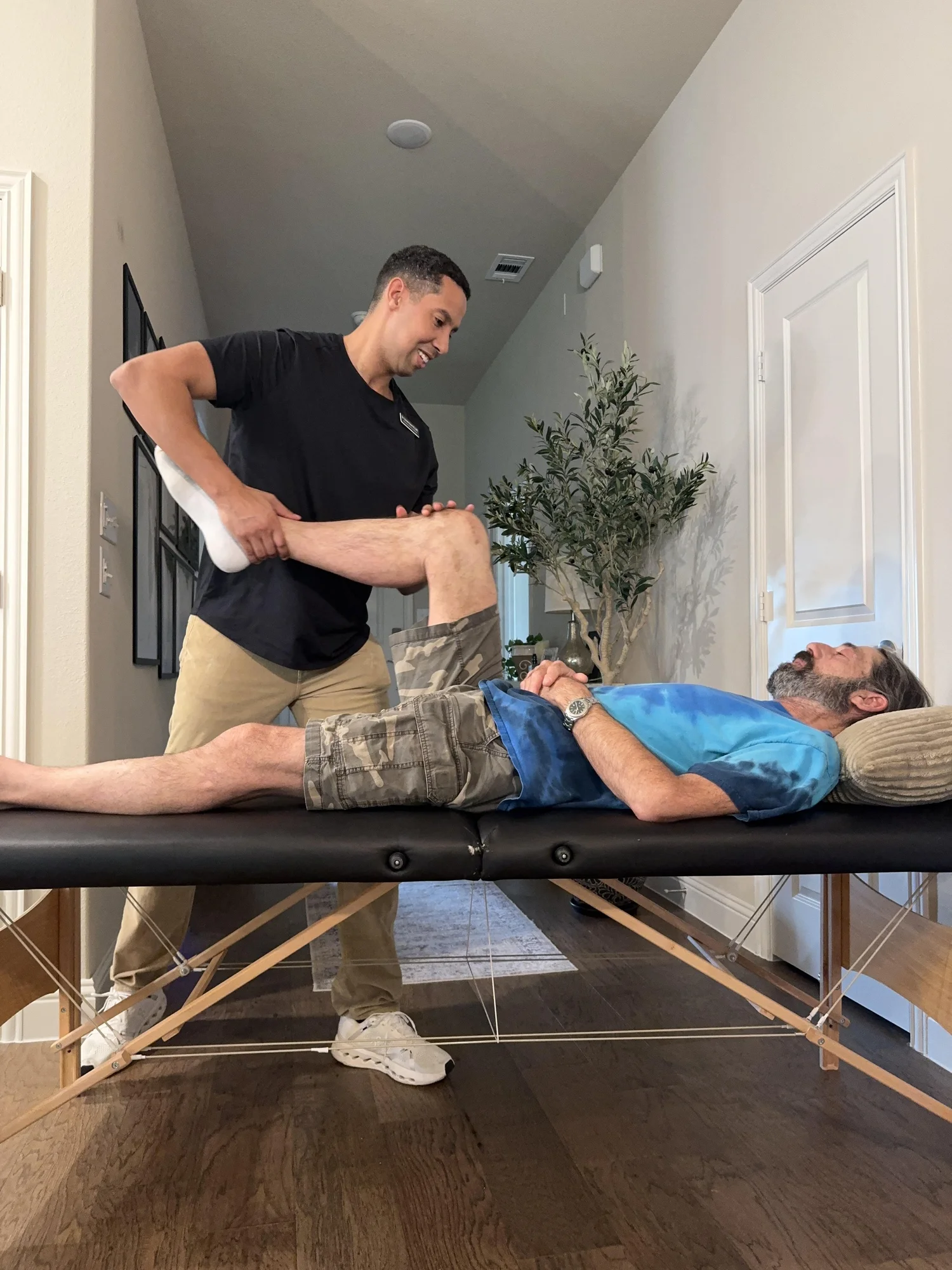
Home health is coordinated skilled care; mobile physical therapy is outpatient PT brought to you
Both can happen in the home, but they are different care models. The better fit depends on medical stability, nursing and multidisciplinary needs, eligibility, payer rules, and whether physical therapy is the primary service you need.
By Zakaria Nadif, PT, DPT, OCS, CSCS, Cert. Dry NeedlingClinically reviewed
The shortest answer
Choose the setting around the skilled need—not convenience alone
Neither model is “better” in general. Home health physical therapists can provide skilled rehabilitation. The distinction is the care model, eligibility framework, team structure, and current level of need.
Side-by-side comparison
The practical differences
| Question | Home health | Mobile outpatient physical therapy |
|---|---|---|
| Primary purpose | Coordinated eligible skilled care at home for illness, injury, or recovery. | Physical therapy evaluation and treatment delivered at the patient’s location under an outpatient care model. |
| Typical fit | A person who may need nursing, medical monitoring, multiple disciplines, or a qualifying homebound plan. | A medically stable person whose primary skilled need is rehabilitation. |
| Possible services | Depending on eligibility and plan: nursing, PT, OT, speech-language pathology, social services, and limited aide care tied to the skilled plan. | Physical therapy services within the clinician’s scope and the individual plan of care. |
| Homebound standard | Original Medicare home health generally requires the beneficiary to meet its homebound and skilled-service criteria. | Not governed by the Medicare home-health homebound standard; payer and provider rules still vary. |
| Common goals | Medical stability, wound or medication needs, safe daily function, mobility, and coordinated recovery. | Pain, strength, balance, gait, mobility, postoperative rehabilitation, and return to meaningful activity. |
| Care structure | Agency-based plan with eligible services ordered and provided through the home-health framework. | A physical therapist manages the outpatient PT plan, coordinating with other clinicians when appropriate. |
| Coverage | Depends on benefit criteria, medical necessity, certification, agency participation, and payer rules. | Depends on medical necessity, benefits, provider participation, referral rules, network status, and applicable costs. |
| Strongest signal | Nursing, broader medical needs, or several disciplines are important to safe recovery. | The person is stable and PT is the main skilled service needed. |
This comparison is educational, not a coverage determination. Verify the exact benefit, provider participation, cost-sharing, and service location with the provider and payer before care begins.
What home health is
An agency-based model that can coordinate several skilled services
Home health may include medically necessary part-time or intermittent skilled nursing, physical therapy, occupational therapy, speech-language pathology, medical social services, and limited aide services when eligibility and plan requirements are met.
- Skilled nursing may address a surgical wound, injections, education, or monitoring of serious or unstable health status.
- Home health PT can address transfers, walking, strength, balance, device use, and home safety.
- Other disciplines may be added when their skills are medically necessary.
- Care is organized through the home health agency and the ordered plan of care.
Home health is not automatically 24-hour care, housekeeping, meal delivery, or unlimited personal assistance. The available services depend on clinical need, eligibility, and the payer’s benefit.
What mobile outpatient PT is
Outpatient rehabilitation delivered where the patient lives or works
The setting changes; the service remains outpatient physical therapy. A mobile PT visit may include evaluation, therapeutic exercise, gait and balance training, neuromuscular retraining, manual therapy, task practice, device education, and a home program when clinically appropriate.
- The person should be medically stable enough to participate safely.
- Physical therapy should be the primary skilled service needed.
- The home can be used to test real stairs, transfers, walking routes, workstations, or equipment.
- Transportation difficulty or preference may influence the choice, but it does not by itself determine insurance eligibility.
- The therapist should refer back to medical, nursing, or emergency care when the problem is outside PT scope.
Mobile outpatient PT is not home health simply because the clinician enters the home. The billing model, plan of care, provider status, and payer rules are different questions.
Signals that may favor home health
The patient needs more than a PT-only plan
Wound or medication needs
Skilled wound care, injection teaching, significant medication changes, or serious illness monitoring may make a coordinated agency model more appropriate.
Several disciplines
Nursing, PT, OT, speech therapy, social services, or eligible aide support may need to work from one home-health plan.
Leaving home is a major burden
The person may require assistance, a device, special transportation, or considerable effort to leave because of illness or injury.
Recent complex discharge
A medically complex recovery may benefit from closer skilled coordination before outpatient-level rehabilitation is the primary need.
Participation is not yet stable
Alertness, vital-sign response, wound status, or functional tolerance may need medical review and broader support.
The benefit criteria are met
A qualifying clinician assessment, order, skilled need, homebound status, and certified agency may be required under Original Medicare.
Signals that may favor mobile outpatient PT
The patient is stable and rehabilitation is the main skilled need
- Medical status is stable and no routine nursing service is required.
- The person can safely participate in outpatient-level evaluation and treatment.
- Goals center on pain, mobility, strength, balance, walking, or return to activity.
- The real home, gym, office, or community environment is useful to the assessment.
- Transportation, scheduling, privacy, or caregiver logistics make an in-location visit attractive.
- The provider and payer have confirmed the service model and expected cost.
Being unable to drive does not automatically establish homebound status, and being able to leave home does not automatically make mobile outpatient PT unnecessary.
Transition between models
The next setting may change as the need changes
A patient may begin with home health after a hospitalization or operation, then transition when nursing or broader medical needs resolve and rehabilitation remains the primary need.
Confirm medical stability
Resolve or clearly manage wound, medication, vital-sign, and other skilled medical concerns.
Share the current plan
Bring precautions, device status, recent measures, exercise response, and the goals that remain.
Avoid coverage surprises
Ask whether services can overlap and confirm discharge, start dates, provider participation, and costs.
Reassess the real task
The outpatient plan should begin from current function, not simply continue every prior exercise unchanged.
Medicare and payer questions
“At home” does not identify the benefit by itself
Original Medicare home health has defined eligibility and provider requirements. Medicare states that a beneficiary generally must need part-time or intermittent skilled services and be homebound; a qualified clinician must assess and order the care, and a Medicare-certified agency must provide it. Homebound does not necessarily mean never leaving home, but leaving must normally require help or considerable effort under the benefit’s standard.
Medicare Part B may help pay for medically necessary outpatient physical therapy for eligible people. Whether a specific mobile visit, provider, location, referral, or cost is covered depends on the applicable rules and facts—confirm before scheduling.
Medicare: home health services · Medicare: physical therapy services
Coverage details can change and other insurance plans may use different definitions. This page is not a benefit quote, legal advice, or a promise of reimbursement.
Questions to ask before choosing
Make the care model explicit
Home health vs mobile PT
Eight practical answers
Are home health and mobile physical therapy the same?
No. Both may occur at home, but home health is an agency-based model that can include nursing and several disciplines. Mobile PT is outpatient physical therapy delivered at the patient’s location.
Do I need to be homebound for mobile physical therapy?
The Medicare home-health homebound standard does not define the mobile outpatient PT model. Eligibility and coverage still depend on the provider, payer, medical necessity, and applicable plan rules.
Can home health include physical therapy?
Yes. PT can be part of an eligible home-health plan and may address walking, transfers, strength, balance, device use, and safety.
Which option fits wound care or medication monitoring?
A home-health model may be more appropriate when skilled nursing is needed alongside rehabilitation. The ordering clinician, agency, and payer determine clinical fit and benefit eligibility.
Which option is better after surgery?
It depends on stability and the services required. Nursing or multidisciplinary needs may favor home health; a stable patient whose main need is rehabilitation may fit mobile outpatient PT.
Does Medicare cover PT provided at home?
Medicare may cover eligible home-health PT under the home-health benefit and medically necessary outpatient PT under Part B. The exact service model, provider, location, eligibility, and costs must be confirmed.
Can I transition from home health to mobile outpatient PT?
Yes, when broader medical or nursing needs resolve and rehabilitation remains. Coordinate clinical handoff, dates, provider status, and payer rules before the transition.
How do I decide which type of care I need in DFW?
Start with three questions: Are you medically stable? Do you need nursing or several disciplines? Is physical therapy the primary skilled need? Then verify the care model and coverage with the clinicians and payer.
Primary guidance
Sources
- Medicare.gov. Home Health Services.
- Medicare.gov. Physical Therapy Services.
- Centers for Medicare & Medicaid Services. Home Health Agencies.
- American Physical Therapy Association. Home Health Practice Setting.
Educational information only. Benefit rules, network status, clinical eligibility, and patient costs vary. Confirm current details with the provider and payer.
Mobile outpatient physical therapy in DFW
Medically stable and primarily need physical therapy?
Argan Physiotherapy provides one-on-one outpatient physical therapy at appropriate homes, offices, and locations across selected DFW communities. We can clarify clinical fit, but coverage and benefits should be confirmed before care begins.